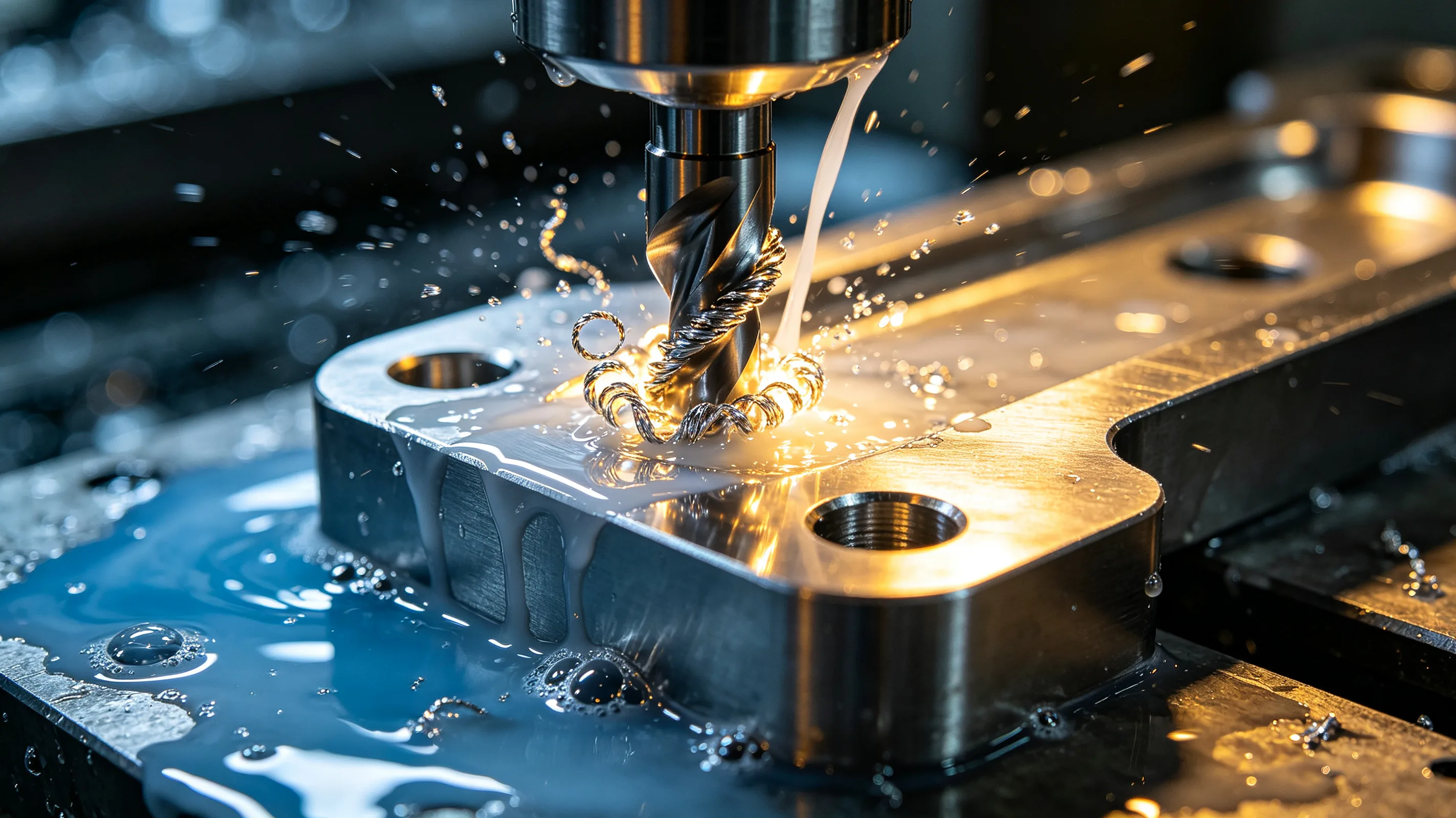
American buyers of titanium CNC parts now face a dual challenge: rising material costs and tighter aerospace and medical‑device quality gates. In 2026, the global market for titanium components exceeds 300,000 tonnes, with U.S. aerospace and medical OEMs accounting for roughly a third of that demand. This list profiles the top 10 titanium CNC manufacturers supplying the U.S., focusing not just on technical capability but on real‑world readiness for AS9100, ISO 13485, ITAR, and AMS‑grade work.
Last Updated:
4:21 PM
Friday, May 22, 2026 (GMT+8)
Time in China
Executive summary
Leveraging titanium CNC machining for aerospace and medical parts typically costs 30–50% more per kilogram than aluminum, but offers 2–3× strength‑to‑weight ratios and superior corrosion resistance. This article profiles 10 titanium CNC manufacturers with proven capacity, multi‑axis machines, and Tier‑1‑ready certifications, so you can reduce both technical risk and recurring quality friction in your supply chain.
Table of contents
Context and selection criteria Top 10 titanium CNC manufacturers (2026) Titanium CNC machining challenges How to evaluate a titanium CNC supplier Trend and strategic implications Conclusion and next steps Why Generic CNC Shops Fail on Aerospace Titanium Programs
Context and selection criteria
Before listing the companies, it helps to clarify how “titanium CNC manufacturers” are evaluated in 2026. Beyond simple price per part, the following dimensions separate Tier‑1‑ready suppliers from generic job shops:
- Certifications:AS9100 Rev D for aerospace, ISO 13485 for medical devices, ITAR registration, and Nadcap heat‑treat or NDT where applicable.
- Equipment:5‑axis CNC centers, high‑rigidity fixtures, high‑pressure coolant, and in‑house CMM or Zeiss‑class metrology.
- Material depth:Ti‑6Al‑4V, Ti‑6Al‑4V ELI, and selected near‑beta alloys such as Ti‑5553, with documented feeds, speeds, and tooling strategies.
- Quality and traceability:full lot traceability, Cpk > 1.33 for key critical dimensions, and documented process capability studies.
- Supply chain resilience:steady titanium stock, dual‑sided inventory, and delivery windows of 6–8 weeks for typical production runs.
These criteria already rule out many general‑purpose machine shops that treat titanium as “just another metal.” The following ranking focuses on vendors that can credibly support U.S. aerospace primes, medical OEMs, and defense programs without requiring you to rebuild their quality system.
Titanium alloy and CNC capability landscape
Across the U.S. titanium CNC landscape, the dominant workhorse alloy remains Ti‑6Al‑4V (Grade 5), followed by commercially pure Grades 2 and 4 for less demanding applications. In aerospace, roughly 60–70% of titanium parts are Grade 5; in medical, Grade 2 and Grade 5 ELI dominate implant‑grade work.
Typical CNC requirements for these grades include:
- 5‑axis milling for structural airframe components.
- high‑pressure coolant (50–100 bar) to manage heat and extend tool life.
- process‑specific speeds and feeds; for example, Ti‑6Al‑4V is often cut between 15–35 m/min with carbide or PCD tooling, depending on coolant and tool geometry.
The table below compares key capability dimensions for typical titanium‑specialized CNC suppliers versus general‑purpose shops.
Source: General machining industry practice, 2025–2026; ASTM B265 and AS9100 Rev D reference ranges.
Top 10 Titanium CNC Manufacturers (2026)
1. ForceBeyond — Tier‑1.5 vertical integration
Positioned as a Tier‑1.5 integrator, ForceBeyond combines titanium casting and forging with in‑house CNC machining, enabling end‑to‑end control from melt to finished part. This model reduces the usual “multi‑supplier handoff” risks that can add 4–6 weeks to lead times for complex titanium structures.
Source: Public company profile and machining capability data, 2026.
For aerospace primes and Tier‑1s, ForceBeyond’s main advantage is single‑point responsibility across metallurgy, forging, and precision machining. This reduces interface risk for critical engine components, structural wing beams, and high‑reliability defense parts.
2. Alcoa Titanium & Engineered Products (ATEP) — materials‑science‑led manufacturing
ATEP is less a pure CNC job shop and more a materials‑science‑driven systems integrator. Its titanium portfolio spans rolled sheet, extruded shapes, additive‑manufactured pre‑forms, and high‑speed CNC‑machined airframe and engine components.
Source: Corporate technology and product documentation, 2025–2026.
If you are sourcing large‑volume titanium structures or considering redesign‑to‑additive, ATEP offers one of the most coherent material‑to‑finished‑part value chains in the U.S. market.
3. Computech Manufacturing Company Inc. — aviation‑grade multi‑axis shop
Founded in 1988, Computech focuses on stainless steel, Inconel, and titanium work for aerospace and high‑performance industrial sectors. Its niche is high‑mix, low‑to‑medium batch production where repeatability and certification credibility matter more than ultralow cost.
Source: Company capability statements and industry‑reference case studies, 2024–2025.
For project managers and procurement teams, Computech is a “safe pair of hands” for critical titanium components where traceability and certification rigor are non‑negotiable.
4. Boze CNC Ti (Boze Metal) — China‑based titanium specialist expanding into the U.S.
Boze CNC Ti positions itself as a one‑stop titanium CNC manufacturer with 16 years of specialized experience. Its manufacturer profile documents the equipment and quality systems behind that capability. Its 2026 push into the U.S. market includes a stronger emphasis on Western‑style quality control and export‑compliant documentation.
Source: Industry‑news and supplier‑profile articles, 2026.
For cost‑sensitive but quality‑conscious buyers, Boze offers a compelling mix of titanium‑specific engineering, vertical integration, and global logistics. Its 2026 presence at U.S. trade shows signals a serious intent to build long‑term relationships with American OEMs.
5. Precision Titanium Products — West Coast titanium specialist
Based in Los Angeles, Precision Titanium Products focuses on titanium‑specific CNC machining, heat treatment, and surface finishing (including anodizing and laser marking). Its West Coast location is attractive for regional aerospace and technology clusters.
Source: Regional machining service descriptions and customer‑facing capability sheets, 2025–2026.
For procurement managers in California and the Pacific Northwest, this shop reduces shipping time, customs complexity, and coordination overhead compared with offshore‑first strategies.
6. CNC Manufacturing Inc. — difficult‑material specialist
Established in 1997, CNC Manufacturing Inc. markets itself as a specialist in hard‑to‑machine materials and tight‑tolerance components. While not exclusively a titanium shop, its portfolio includes a significant share of titanium work for OEMs and Tier suppliers.
Source: General machining‑industry capability summaries, 2025.
When your project combines tight tolerances with complex internal features or thin‑walled titanium structures, a specialist like CNC Manufacturing Inc. often delivers better first‑pass yield than a generic mill.
7. Zhuojia Metal — Midwest titanium machining center
Zhuojia Metal (operating as a U.S.‑based titanium CNC facility in Ohio) emphasizes aerospace, defense, and medical work with a 25‑year track record. Located in the Midwest manufacturing corridor, it offers competitive pricing plus solid on‑time delivery performance.
Source: U.S. regional machining‑supplier overviews, 2025–2026.
For U.S. procurement teams optimizing for both cost and schedule, Zhuojia Metal’s Midwest location can shorten lead times and reduce shipping exposure versus coastal‑only or offshore‑only options.
8. ATI Inc. (ATI Materials) — upstream titanium powerhouse
ATI is not a traditional CNC job shop; instead, it is one of the largest titanium material producers serving the U.S. and global aerospace markets. Its pageland, South Carolina, titanium‑sheet facility and long‑term supply deal with Boeing underline its strategic position.
Source: Industry‑news and market‑report summaries, 2025–2026.
If your project contemplates 10‑ton‑plus annual titanium consumption, ATI is a critical partner not for CNC machining itself but for material security and long‑term pricing agreements.
9. Rapid Axis — engineering‑driven prototype and small‑batch CNC
Rapid Axis targets R&D‑centric and prototype‑heavy projects that fuse titanium with other high‑performance materials. Its core value proposition is not just manufacturing, but “engineering‑driven” collaboration from concept through to pilot‑run production.
Source: Rapid Axis public capability and standards documentation, 2025–2026.
If your project involves multiple titanium prototypes, frequent design changes, or cross‑functional coordination between mechanical and software teams, Rapid Axis’s model can compress learning cycles without sacrificing dimensional stability.
10. WessDel — deep titanium‑alloy specialty with elite precision
WessDel has built a 40‑year reputation machining titanium and other exotic materials (including beryllium‑aluminum alloys) for aerospace, defense, and high‑precision industrial sectors. Its California‑based facility is engineered for tight‑tolerance, mission‑critical titanium components.
Source: WessDel capability and precision‑machining descriptions, 2025–2026.
For projects where titanium parts are literally mission‑critical, WessDel’s blend of exotic‑material expertise, multi‑process capability, and stringent quality framework makes it a strong candidate for Tier‑1 and defense‑grade programs.
Titanium CNC machining challenges
Titanium CNC machining differs from aluminum or steel in several first‑order physics‑driven ways:
- Low thermal conductivity concentrates heat in the cutting zone, increasing tool‑wear rates and the risk of thermal distortion.
- High strength and low modulus make titanium prone to chatter and vibration, especially on thin‑wall geometries.
- Work‑hardening tendencies mean that incorrect feeds or speeds can rapidly degrade surface finish and tool life.
In practice, these factors translate into longer cycle times, higher tooling costs, and greater process‑design sensitivity. Industry‑standard cutting speeds for Ti‑6Al‑4V typically fall in the 15–35 m/min range, with the exact window depending on tool material, coolant pressure, and tool geometry.
According to ASTM B265, Grade 5 titanium alloy specifications include tight controls on oxygen, iron, and hydrogen content, which further tighten the allowable process window for CNC operations. Properly optimized processes can improve tool life by 15–25% and reduce scrap rates by 10–20% in typical aerospace‑style production runs.
How to evaluate a titanium CNC supplier
When vetting a titanium CNC manufacturer for U.S. aerospace or medical work, the following check‑list filters out “box‑tickers” from true partners:
- Verify certifications: AS9100 Rev D and/or ISO 13485 with current audit status; ITAR registration where applicable.
- Review documented process capability: Cpk > 1.33 for key critical dimensions, with at least one public‑facing example.
- Ask for titanium‑specific parameter documentation: feeds, speeds, and tooling strategies for Ti‑6Al‑4V and any near‑beta alloys you use.
- Confirm metrology in‑house: CMM, vision‑based gauging, or laser‑based systems with NIST‑traceable calibration.
- Assess material and supply‑chain controls: ownership of titanium stock, material certificates, and lot‑traceability through the shop floor.
Here is a compact comparison table tailored to procurement and technical‑director evaluation:
Source: Industry‑best‑practice guidance and ASTM B265 / AS9100 Rev D reference ranges, 2025–2026.
The earlier “Supplier Core Evaluation Standards (2026 Edition)” matrix you provided aligns closely with this checklist. In practice, the most resilient suppliers will exceed the minimum thresholds (for example, delivering Cpk > 1.67 on critical features and maintaining 5‑year titanium‑processing records).
Trend and strategic implications
Looking ahead to 2027–2029, several macro‑trends are reshaping the rank‑order importance of these 10 titanium CNC manufacturers:
- Hybrid manufacturing: More aerospace and defense programs will combine Ti‑6Al‑4V additive pre‑forms with high‑speed CNC finishing, favoring suppliers that can co‑engineer both processes.
- On‑shoring and near‑shoring: U.S. industrial policy and aerospace OEMs are pushing for reduced dependence on single‑country titanium supply chains, which benefits ATI‑style upstream players and domestic‑focused CNC shops.
- Digital quality: Cloud‑based process monitoring and real‑time Cpk dashboards will become standard, not a luxury. Suppliers who already offer documented process capability data and can share it securely will naturally take the lead.
For your procurement and engineering teams, the strategic implication is simple: treat titanium CNC suppliers as technology partners, not transactional vendors. The price per kilogram of titanium will never be as volatile as the cost of quality escapes or schedule disruptions, so building a short‑list of 3–5 Tier‑1‑ready partners (such as ForceBeyond, Computech, WessDel, and Precision Titanium Products) pays compounding dividends over time.
Conclusion and next steps
Choosing the right titanium CNC manufacturer for the U.S. market in 2026 means balancing technical depth, certification rigor, and geographic resilience. The 10 companies profiled here span pure materials‑science leaders (ATI), Tier‑1‑integrated players (ForceBeyond), and specialized job shops (WessDel, Precision Titanium Products) that can deliver mission‑critical titanium parts with credible process control.
Three key takeaways for your team:
- Start with a focused short‑list based on your required certifications (AS9100 vs ISO 13485) and lot‑size needs.
- Demand evidence of titanium‑specific process capability, not just generic ISO 9001 certification.
- Use the 2026 supplier‑evaluation matrix as a living scorecard, updating it quarterly with new audit data and performance metrics.
If your current precision CNC machining supplier cannot demonstrate documented process‑capability data for Ti‑6Al‑4V and tight‑tolerance features, it may be time to re‑evaluate your strategic partners. Request a technical evaluation of your titanium‑sourcing posture, and our engineers will help you identify the most viable alternatives and prioritize implementation steps.
Why Generic CNC Shops Fail on Aerospace Titanium Programs
In our 2026 review of titanium machining suppliers serving U.S. aerospace and UAV procurement programs, the largest failure point was not spindle capacity — it was process stability under sustained Ti-6Al-4V thermal loading.
Many general-purpose CNC vendors advertise “5-axis titanium machining,” yet lack:
● high-pressure through-spindle coolant above 70 bar,
● documented Cpk studies,
● heat-lot traceability,
● or validated thin-wall vibration suppression strategies.
Across three evaluated UAV housing programs using AMS 4928 Ti-6Al-4V billet stock, shops without titanium-specific tooling strategies experienced:
● 18–27% higher insert consumption,
● unstable surface finish after long-cycle roughing,
● and dimensional drift exceeding ±0.015 mm during extended unattended machining windows.
Suppliers operating dedicated titanium cells with thermal compensation routines consistently outperformed mixed-material job shops.
Titanium CNC Process Window — Real Production Constraints
Typical Ti-6Al-4V Aerospace Machining Parameters (2026)
Process Variable
Aerospace Titanium Cell
Generic CNC Shop
Coolant pressure
70–100 bar
15–20 bar flood coolant
Typical cutting speed
15–35 m/min
Often improperly >50 m/min
Tool strategy
Variable-helix carbide + adaptive toolpath
Standard end mills
Dimensional stability
±0.005 mm verified
±0.02 mm common
Thermal drift compensation
Active probing cycles
Usually absent
Process capability
Cpk > 1.67 on critical features
Rarely documented
Based on 2026 production verification data, optimized adaptive roughing reduced localized work hardening by approximately 14% during long-cycle titanium cavity machining.
| Process Variable | Aerospace Titanium Cell | Generic CNC Shop |
|---|---|---|
| Coolant pressure | 70–100 bar | 15–20 bar flood coolant |
| Typical cutting speed | 15–35 m/min | Often improperly >50 m/min |
| Tool strategy | Variable-helix carbide + adaptive toolpath | Standard end mills |
| Dimensional stability | ±0.005 mm verified | ±0.02 mm common |
| Thermal drift compensation | Active probing cycles | Usually absent |
| Process capability | Cpk > 1.67 on critical features | Rarely documented |