Anode Type Catalog
Select the Anode Geometry That Matches Your Cell
Ten anode subtypes produced to drawing. Substrate form (strip, plate, tube, bar, expanded mesh) and coating chemistry are matched to the cell envelope, reaction environment and operating schedule. Geometry within each subtype is produced per drawing.
01 — MMO Linear Anode
Solid bar substrate with mixed metal oxide coating, used in long-run impressed-current cathodic protection of pipelines. Bar stock per ASTM B348.
Use when: ASTM B348 bar · MMO · impressed current · long pipeline · deep groundbed
02 — MMO Wire Anode
Titanium wire substrate with mixed metal oxide coating, used in reinforced concrete and tank-bottom cathodic protection systems where distributed low-current density is required.
Use when: wire substrate · MMO · reinforced concrete · tank bottom · distributed current
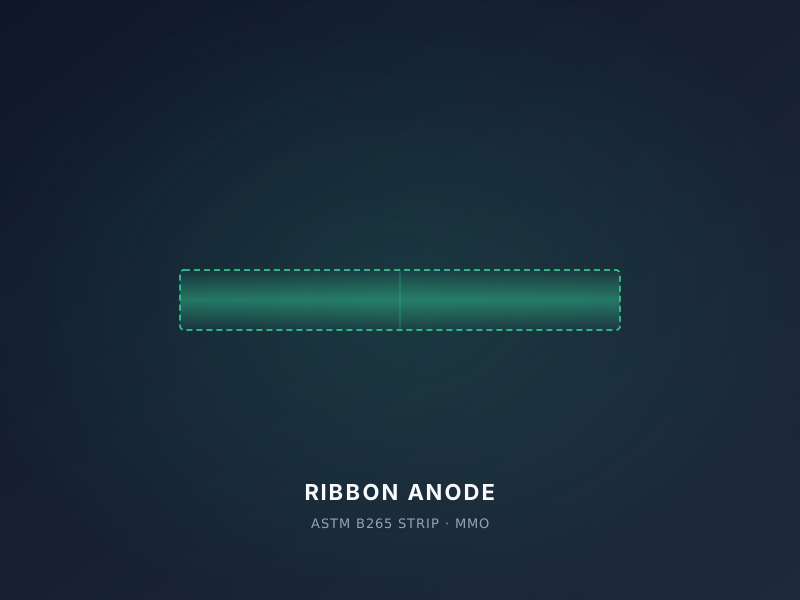
03 — MMO Ribbon Anode
Strip substrate with mixed metal oxide coating, used in shallow groundbed and mesh cathodic protection systems. Strip stock per ASTM B265.
Use when: ASTM B265 strip · MMO · shallow groundbed · mesh CP · long length
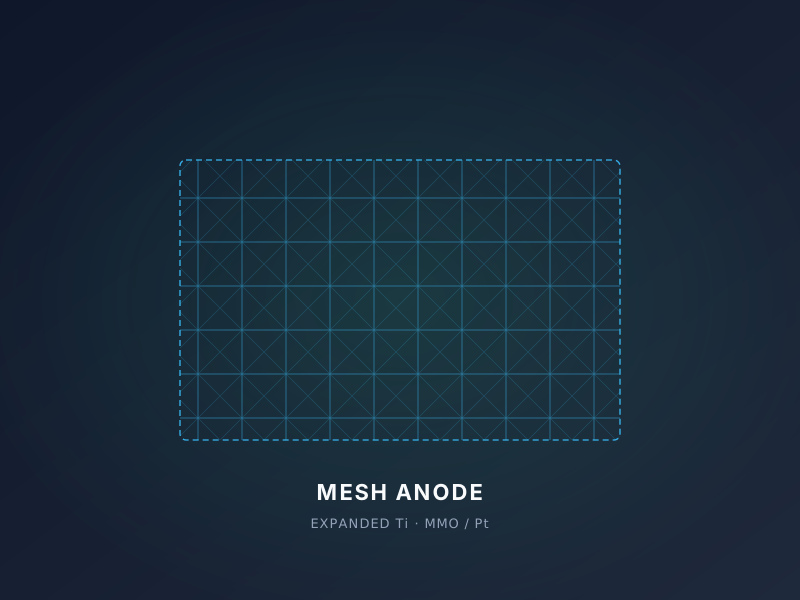
04 — MMO Mesh Ribbon Anode
Expanded mesh substrate with mixed metal oxide coating, used where active surface area and flexibility are required for complex surface cathodic protection.
Use when: expanded mesh · MMO · flexible anode · complex surface · CP mesh
05 — MMO Canister Anode
Tubular anode with coke-bake backfill canistered for deep-well and deep groundbed cathodic protection installations.
Use when: canister · tubular anode · coke backfill · deep well · deep groundbed
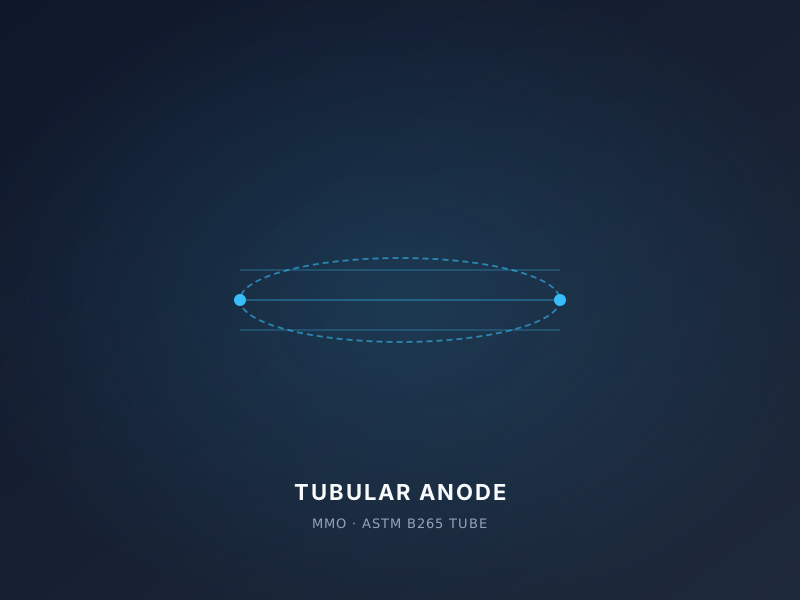
06 — MMO Tubular Anode
Tube substrate with mixed metal oxide coating, used in continuous-duty industrial cathodic protection and as a back-up anode in electrochemical service. Tube stock per ASTM B265.
Use when: ASTM B265 tube · MMO · continuous duty · industrial CP · back-up anode
07 — MMO Disc Anode
Disc substrate with mixed metal oxide coating, used in limited-volume electrochemical cells, bench-scale cells and electrochemical sensors.
Use when: disc substrate · MMO · limited volume · bench-scale cell · sensor
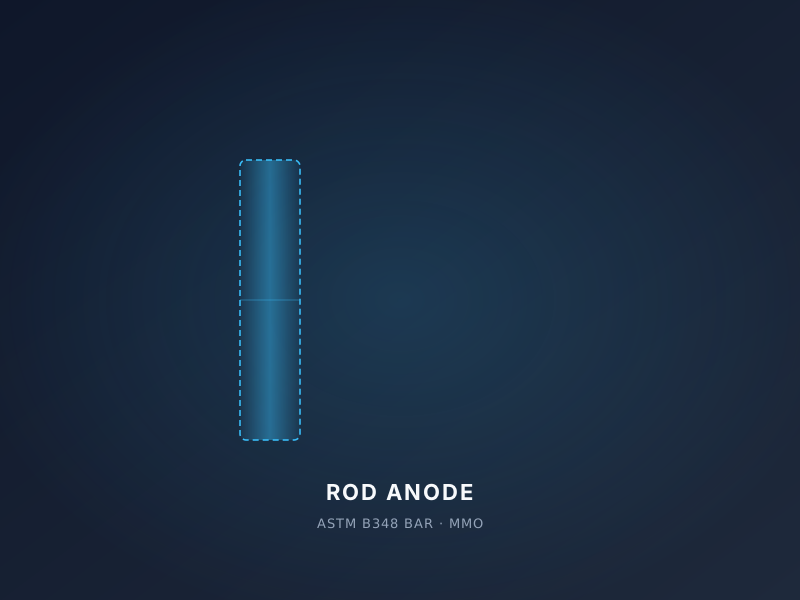
08 — MMO Rod Anode
Solid rod substrate with mixed metal oxide coating, used as a standalone anode, internal cell rod and stem-mounted anode. Rod stock per ASTM B348.
Use when: ASTM B348 rod · MMO · standalone anode · internal cell · stem mount
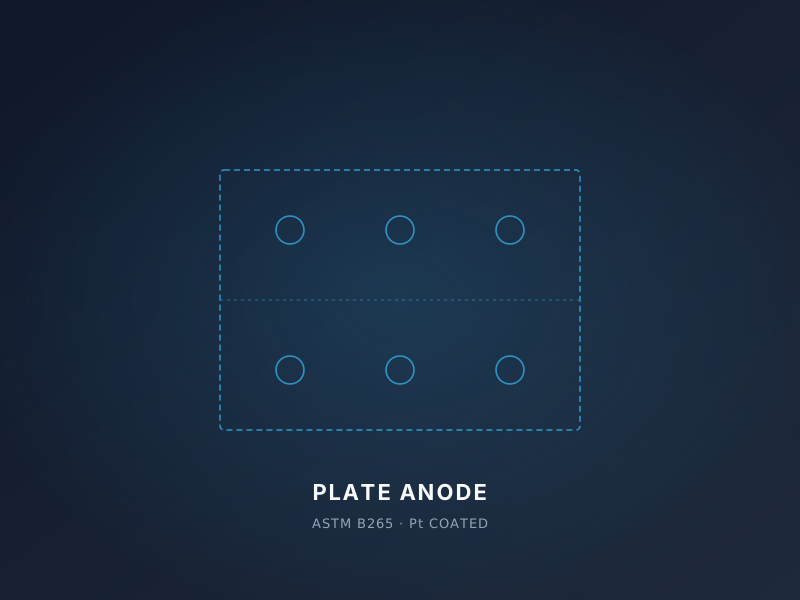
09 — Platinized Plate Anode
Plate substrate with platinum coating, used in electroplating, water treatment and inert-electrolyte applications. Plate stock per ASTM B265.
Use when: ASTM B265 plate · Pt coating · inert electrolyte · electroplating · water treatment
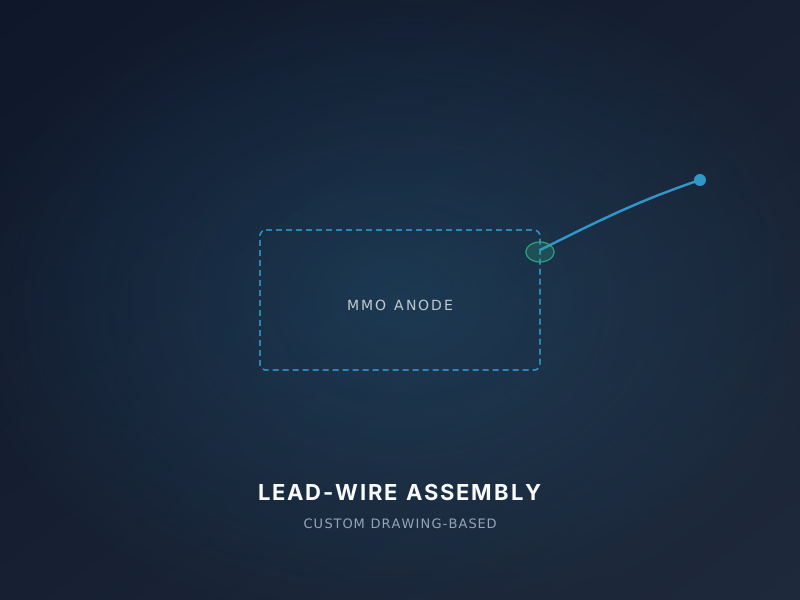
10 — Custom-Profile Anode Assembly
Custom substrate formed to a non-standard profile, with lead wire or tab attached, insulated and sealed per service environment. Geometry, joint method and coating chemistry are reviewed per drawing.
Use when: custom drawing · lead wire · tab · seal method · assembly · DFM review
Stock mesh and standard plate sizes are listed on dedicated product pages. This page covers custom-engineered anode geometries matched to customer cells.
Engineering note. Use-when guidance below is a starting point. Final geometry, substrate grade and coating chemistry are confirmed at DFM review of your drawing.
Coating Selector
Coating Chemistry Selector
Match coating family to your reaction environment. Selection depends on electrolyte chemistry, pH, temperature, current density profile and target service life. The matrix below is a starting point.
| Reaction Environment | IrO2 | RuO2 | Pt | Mixed MMO |
|---|---|---|---|---|
| Oxygen evolution (acid electrolyte) | Primary | — | — | Per project |
| Oxygen evolution (neutral electrolyte) | Per project | — | — | Primary |
| Chlorine evolution | — | Primary | — | Per project |
| Inert / acid sulfate electrolyte | — | — | Primary | — |
| Cathodic protection (soil / seawater) | — | — | — | Primary |
Engineering note. Final coating selection depends on electrolyte chemistry, pH, temperature, current density and target service life, agreed per project. Coating life and current density values are not stated as part numbers.
RFQ Inputs
Operating Parameters Required at RFQ
Eight parameters reviewed at RFQ. These values drive coating selection, substrate grade, geometry review and documentation scope. None of them need to be final at first contact.
- 01
Electrolyte composition
Selects coating chemistry family (MMO / Pt / IrO2 / RuO2).
- 02
pH range
Selects substrate grade and coating passivation requirements.
- 03
Temperature range
Selects thermal cycling tolerance and seal material.
- 04
Current density / current output
Sizes the active area and coating pass count.
- 05
Operating schedule
Continuous vs. intermittent duty selects coating load.
- 06
Target design life
Selects coating pass count and substrate thickness allowance.
- 07
Dimensions / active area
Selects substrate geometry and forming sequence.
- 08
Electrical connection / lead-wire termination
Selects joint method, seal method and insulation.
Engineering note. Coating life and current density are application-dependent and agreed per project. The parameters below are the input set our engineering team reviews before quotation.
Applications
Applications by Industry
Eight application verticals. Substrate form, coating chemistry and lead-wire specification are matched to the operating environment per project.
Cathodic Protection
Impressed-current CP anodes for marine structures, buried pipelines, tank bottoms, deep groundbed and reinforced concrete.
Service: Low-voltage DC · soil or seawater · long-duration continuous duty
Electrochlorination
On-site sodium hypochlorite generation for water treatment and disinfection. Mesh and plate anodes for brine and seawater feed.
Service: Brine or seawater · variable temperature · on-site generation
Water Treatment
Oxidant production and electrochemical water-treatment cells. Mesh and plate anodes with MMO or platinum coating.
Service: Variable electrolyte · oxidant production · batch or continuous
Electrowinning
Anodes for copper, zinc, manganese and other metal recovery cells. Substrate form and coating chemistry per electrolyte.
Service: Acid sulfate or chloride · controlled temperature · batch or continuous
Chlor-Alkali
Anodes for chlor-alkali membrane and diaphragm cells. RuO2-based coating selected for chlorine-evolution environments.
Service: Saturated brine · elevated temperature · continuous duty
Copper Foil Production
Anodes for electrolytic copper foil manufacturing. Platinized plate substrate with controlled surface profile and current distribution.
Service: Acid sulfate electrolyte · specific current profile · controlled surface finish
PCB Electroplating
Platinized plate and mesh anodes for PCB plating tanks. Hole pattern, plate geometry and lead-wire attachment produced to drawing.
Service: Acid or alkaline bath · moderate temperature · tight thickness control
Sodium Hypochlorite Generation
Brine-electrolysis anodes for on-site hypochlorite production. RuO2-based coating selected for chlorine-evolution environments.
Service: Brine feed · variable pH · on-site chlorine production
Boundary note. Application-specific coating life and current density are agreed per project based on electrolyte, temperature and operating parameters. They are not stated as part numbers on this page.
Engineering Considerations
Engineering Considerations Reviewed Per Drawing
Five technical areas reviewed at DFM. Each item is confirmed against your drawing and service description.
Coating uniformity and edge coverage
Coating thickness and edge coverage depend on profile geometry, coating application method and number of passes. Coating uniformity on complex profiles is reviewed at DFM.
Focus: coating thickness · edge coverage · complex profile · coating passes · DFM review
Substrate surface preparation
Substrate roughness, pickling condition and surface contamination are controlled prior to coating. Surface preparation method depends on starting condition and coating chemistry.
Focus: roughness · pickling · contamination control · starting condition · coating chemistry
Lead wire and tab interface
Joint method, seal method and insulation are selected per service environment. Joint integrity is reviewed against current load and electrolyte exposure at DFM.
Focus: joint method · seal method · insulation · current load · electrolyte exposure
Dimensional fit to cell or tank
Mounting features, hole pattern, edge clearance and active area are matched to the existing cell. Dimensional fit is reviewed against your drawing at DFM.
Focus: mounting feature · hole pattern · edge clearance · active area · existing cell
Prototype versus repeat coating runs
Prototype coating runs are produced with full lot documentation. Repeat runs are matched against the prototype baseline by coating record and lot traceability.
Focus: prototype run · repeat run · lot traceability · coating record · baseline
Engineering note. Engineering review is per drawing. The items below are reviewed case-by-case against your service environment, and the resulting manufacturing plan is documented at DFM.
Manufacturing Workflow
Eight-step process from substrate stock to inspected finished anode. The sequence applies to standard custom-engineered anodes. Specific thermal cycles and coating passes depend on coating chemistry and substrate geometry, confirmed at DFM.
-
1. Substrate forming and shearing
Strip, plate or bar stock is sheared, rolled or cut to the blank dimensions called for on the drawing. Forming operations (bending, drawing, expanding) are performed where the geometry requires.
Focus: shearing · rolling · cutting · bending · drawing · expanding · blank dimensions
-
2. Substrate machining
Mounting features, hole patterns, edge preparations and active-area trims are machined. Edge condition is controlled to support subsequent coating application.
Focus: mounting features · hole patterns · edge prep · active-area trim · CNC machining
-
3. Degreasing
Oils, handling residue and shop contaminants are removed prior to acid etching. Degreasing method is matched to substrate grade and starting condition.
Focus: oil removal · handling residue · shop contaminants · substrate grade
-
4. Acid etching
Surface oxides and residual scale are removed by acid etching. Etch chemistry and time are selected per substrate grade and starting surface condition.
Focus: oxide removal · scale removal · etch chemistry · controlled roughness · adhesion
-
5. Coating application (thermal decomposition)
MMO or platinum precursor is applied by thermal decomposition. Coating chemistry is selected per electrolyte and reaction environment. Number of passes depends on target loading and profile geometry.
Focus: thermal decomposition · MMO precursor · Pt precursor · coating passes · profile geometry
-
6. Sintering
Coating is sintered to bond the catalyst layer to the substrate. Sintering temperature and time depend on coating chemistry. The thermal cycle is documented per lot.
Focus: sintering · thermal cycle · coating bond · lot documentation
-
7. Lead wire and tab attachment
Lead wires or tabs are attached by joint method selected per service environment. Seal method and insulation are applied per electrolyte chemistry and current load.
Focus: lead wire · tab · joint method · seal method · insulation · current load
-
8. Post-coating inspection
Final dimensional, coating continuity, lead-wire joint and documentation checks are performed against the drawing and the lot record.
Focus: dimensional · coating continuity · joint check · lot record · material traceability
Engineering note. The workflow below applies to standard custom-engineered anodes. Specific thermal cycles, coating pass counts and lead-wire termination methods depend on coating chemistry, substrate geometry and current load. The final manufacturing plan is documented at DFM.
Quality and Inspection
Six inspection areas covering substrate verification, dimensional conformance, coating continuity, lead-wire joint integrity, visual condition and documentation. Records are issued per lot.
-
Substrate material verification
Substrate grade, heat number and form per ASTM B265 (strip/plate/sheet) or ASTM B348 (bar) verified against the PO and the drawing.
Records · ASTM B265 · ASTM B348 · heat number · MTC
-
Dimensional inspection
Outside dimensions, thickness, flatness and hole pattern verified against the drawing. Inspection method selected per feature and tolerance.
Records · OD/ID · thickness · flatness · hole pattern · drawing
-
Coating adhesion and continuity
Coating continuity and adhesion reviewed against coating chemistry. Method is documented per coating system and lot.
Records · coating record · continuity · adhesion · per coating system
-
Lead-wire and joint inspection
Lead-wire joint inspected for mechanical integrity (pull test where specified) and seal condition.
Records · pull test · seal condition · current load · electrolyte
-
Visual and surface
Coating appearance and edge coverage reviewed against the lot record. Visual inspection covers active area, edges and lead-wire transition.
Records · coating appearance · edge coverage · active area · transition
-
Documentation and release
Material test certificate (EN 10204 3.1), dimensional report, coating record and lot trace compiled for release.
Documents · EN 10204 3.1 · MTC · dimensional · coating · lot trace
Standards note. Material specifications (ASTM B265, ASTM B348) cover raw stock. Finished-part acceptance criteria are governed by your drawing and PO. Coating life and current density are application-dependent and are not represented in the inspection record.
Process Capabilities
Six process areas operated in-house. Substrate forming, machining, surface preparation, coating, lead-wire attachment and secondary sealing are documented per lot.
Titanium substrate forming
Shearing, rolling, bending, drawing and expanding of titanium strip, plate and bar stock. Forming method documented per part.
Focus: shearing · rolling · bending · drawing · expanding · strip / plate / bar
CNC machining of substrate
Machining of mounting features, hole patterns, edge preparations and active-area trims. Edge condition controlled for subsequent coating application.
Focus: CNC · mounting features · hole patterns · edge prep · active-area trim
Chemical cleaning and etching
Degreasing, acid etching and surface conditioning prior to coating. Etch chemistry and time matched to substrate grade and target coating.
Focus: degreasing · acid etching · surface conditioning · substrate grade
MMO and platinum coating application
Coating application by thermal decomposition. Coating chemistry selected per electrolyte and reaction environment.
Focus: thermal decomposition · MMO · Pt · coating chemistry · coating passes
Lead wire and tab attachment
Joint method, seal method and insulation selected per service environment. Lead-wire termination matched to current load and electrolyte exposure.
Focus: joint method · seal method · insulation · current load · electrolyte exposure
Secondary sealing and insulation
Final seal and insulation applied per electrolyte chemistry and operating temperature. Seal method documented per part.
Focus: seal method · insulation · electrolyte · operating temperature · per-part document
Capability note. Capability ranges are nominal and represent the operating envelope of each process area. Feature-specific feasibility is confirmed by DFM review of your drawing.
FAQ
Frequently Asked Questions
Which substrate grade should I select — Grade 1 or Grade 2?
Grade 1 is selected where forming or drawability is required. Grade 2 is selected where structural rigidity is the controlling criterion. Substrate form is ASTM B265 strip or plate for formed substrates, and ASTM B348 bar for rod and stem substrates. Final grade selection is confirmed at DFM review.
Which coating should I select for chlorine evolution?
RuO2-based coatings are used for chlorine-evolution environments. Final coating selection depends on your electrolyte chemistry, current density profile and expected service life, all of which are reviewed at DFM.
Which coating should I select for oxygen evolution?
IrO2-based coatings are used for oxygen-evolution environments. Where inertness is required, platinum coating is an alternative. Final coating selection is reviewed against your electrolyte and operating parameters at DFM.
Do you attach lead wires or tabs to the anode?
Yes. Lead wires or tabs are attached by joint method selected per service environment, with seal method and insulation applied per electrolyte chemistry and current load. Wire material, cross-section, insulation type and seal method are confirmed at DFM.
Can you re-coat an existing titanium anode?
Existing titanium anode substrates can be stripped and re-coated, subject to substrate condition at intake. Stripping method is selected per substrate condition and coating chemistry; intake inspection is performed before re-coating is scheduled.
What documentation is issued with the finished anode?
A material test certificate (EN 10204 3.1), dimensional report, coating record and lot trace are issued with each lot. Additional documentation scope is confirmed per PO.
Standards note. Material specifications (ASTM B265, ASTM B348) cover raw stock scope. Finished-part acceptance criteria are governed by your drawing and PO.
Engineering Consultation
Send Your Titanium Anode Requirements for Engineering Review
Provide your process conditions, electrical requirements, anode geometry and inspection needs. Our engineering team will review the coating family, active area, electrical connection and manufacturing scope before quotation.
- Coating chemistry selection matched to your electrolyte
- Substrate grade and forming sequence review
- Lead-wire termination and seal method recommendation
- Documentation scope (MTC, dimensional, coating record, NDT)
Form is a structured preview. Complete the inquiry at /rfq/?category=titanium-anode.
Why BOZE
Why BOZE for Titanium Anodes
Six engineering differentiators. Drawn from practice on prior titanium anode programs.
Substrate grade selection per service
Gr1 is selected where forming or drawability is required. Gr2 is selected where structural rigidity is the controlling criterion. Substrate grade and form are documented per part.
Coating chemistry matched to reaction
Coating chemistry is matched to your electrolyte and reaction: IrO2-based for oxygen-evolution environments, RuO2-based for chlorine-evolution environments, platinum where inertness is required.
Drawing-based engineering review
Each drawing is reviewed against cell geometry, electrolyte and operating parameters before manufacturing. The review covers substrate grade, forming sequence, coating application method and lead-wire termination.
Substrate and coating integrated supply
Substrate forming, surface preparation, coating application and lead-wire attachment are managed in a single lot record. Material traceability is maintained from substrate stock to finished anode.
Prototype to production support
Prototype coating runs are produced with full lot documentation. Repeat runs are matched to the prototype baseline by coating record and lot traceability.
Export and project coordination
Export packaging, customs documentation and freight are coordinated per project. Incoterms and shipping documentation are confirmed per PO.