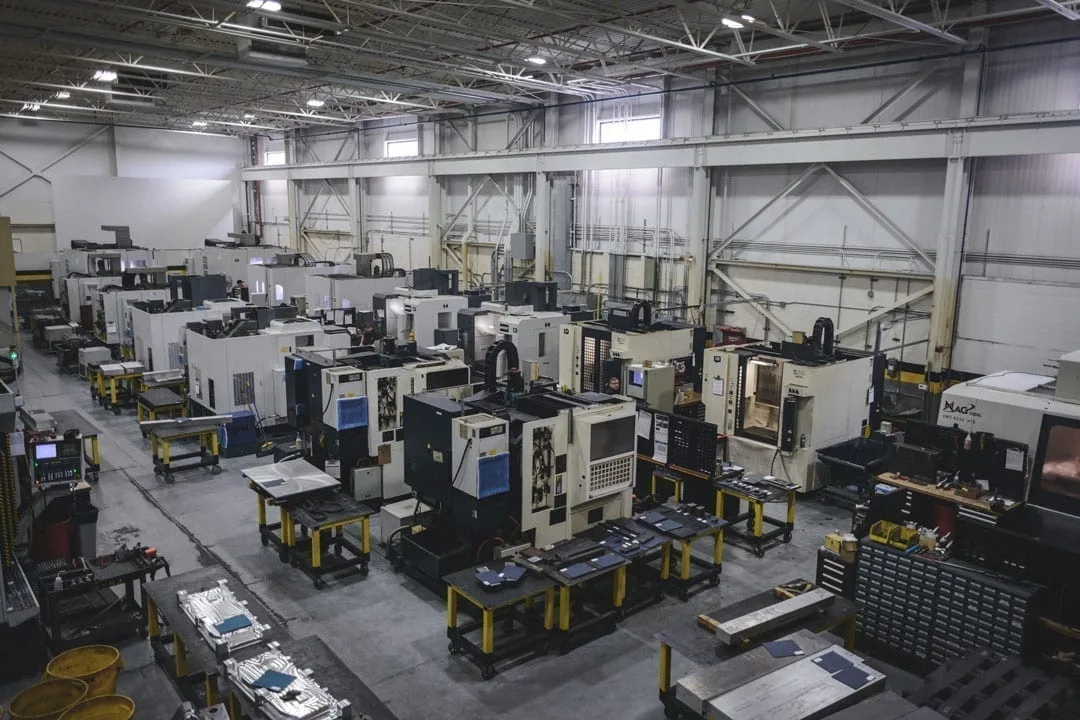
If you are preparing an RFQ for custom titanium machining in China, the most important thing is not the lowest unit price but whether the supplier can hold tolerance, traceability, and delivery consistency across the full production run. For aerospace, medical, energy, and general industrial parts, the right contract manufacturer is one that can quote clearly, document material and process controls, and explain where the real cost and risk sit.
What a strong RFQ should ask for
A strong RFQ for titanium machining should request more than dimensions and quantities. It should specify material grade, drawing revision, critical tolerances, surface finish, inspection method, lot size, packaging requirements, and any applicable certification needs. If the supplier cannot respond to those points without ambiguity, the quote will usually hide later cost growth.
The reason is simple: titanium machining cost is driven by more than machine time. Tool wear, heat management, fixturing stability, inspection time, and rework risk all increase when the part geometry is thin-walled, deep-pocketed, or tightly tolerated. In Chinese contract manufacturing, that gap becomes even larger when the buyer sends incomplete data and expects the factory to fill in the missing engineering assumptions.
The main tradeoff is between quote speed and quote accuracy. A fast RFQ response is useful, but an overly fast quote that ignores fixturing difficulty or traceability work can look attractive and then fail during production. For procurement teams, the safer approach is to force the supplier to quote on the same technical basis as everyone else.
Use a written checklist before sending the RFQ: material grade, quantity by release, tolerance map, inspection plan, certification request, special processes, and target delivery window. That makes supplier comparison far cleaner and reduces the chance of hidden scope changes after award.
| RFQ item | Why it matters | Typical risk if omitted |
|---|---|---|
| Material grade | Controls machinability, strength, and cost structure | Wrong alloy selection or unusable quote basis |
| Critical tolerances | Determines machine time, inspection effort, and reject risk | Price escalation after award |
| Surface finish | Affects tooling strategy and post-processing | Finish mismatch and rework |
| Inspection requirements | Defines metrology cost and documentation burden | Missing quality records |
| Delivery window | Influences capacity allocation and expedited cost | Late shipment or rushed processing |
How to judge a titanium supplier
The best supplier is not the one with the lowest hourly machine rate; it is the one that can repeatedly make acceptable parts with minimal supervision. For custom titanium machining, that usually means stable process control, clear traveler records, appropriate inspection capability, and a realistic understanding of the geometry you are asking them to produce. If the quote is vague about how they will make and inspect the part, treat that as a warning sign.
In aerospace and medical work, the supplier must also understand how traceability and documentation affect release timing. A shop can have good CNC equipment and still fail a program because the paperwork, material verification, or sub-tier process coordination is weak. This is especially common when buyers assume every machine shop handles titanium the same way.
The main contradiction is that a supplier can appear technically strong while still being commercially weak. A shop may own advanced 5-axis equipment, but if it cannot control queue time, material flow, or inspection bottlenecks, the real delivery risk remains high. Procurement should therefore evaluate both machining capability and operational discipline.
For practical sourcing, ask for recent part families similar in material and complexity, not generic capability claims. Then compare whether the supplier can explain tooling choices, fixturing constraints, and quality checks in plain language.
| Evaluation area | What to look for | Red flag |
|---|---|---|
| Material knowledge | Clear understanding of titanium grade behavior and machinability | Generic answers that treat titanium like stainless steel |
| Process control | Stable work instructions, fixturing, and inspection flow | Ad hoc production planning |
| Documentation | Traceable material certificates and inspection records | Incomplete or delayed records |
| Capacity realism | Lead times tied to actual loading and queue time | Overpromised delivery dates |
| Engineering response | Ability to identify manufacturability risks before production | Quote-only behavior with no technical review |
Why titanium jobs miss targets
Titanium machining fails for predictable reasons: heat buildup, tool wear, unstable clamping, poor chip evacuation, and unrealistic tolerances. When the part has deep cavities, thin walls, or tight flatness requirements, even a capable supplier can struggle if the RFQ does not describe the real functional requirement. In those cases, the process may technically run, but the yield and consistency may not be acceptable.
One common failure mode is assuming the first prototype run represents production readiness. Prototype success often comes from slower feeds, more operator attention, and generous setup time, none of which scale cleanly into repeat production. The second or third lot is where hidden instability usually appears.
The tradeoff here is between precision and manufacturability. A tighter tolerance can improve functional fit, but unnecessary tightening increases inspection burden, scrap probability, and schedule risk without improving performance. That is why experienced buyers usually push tolerances only where the design truly needs them.
To reduce failure risk, separate critical dimensions from noncritical ones, and ask the supplier to comment on the hardest features before award. This exposes whether the factory understands the part or is simply accepting the order.
What drives cost in China
Cost in custom titanium machining is driven by part complexity, not just country of manufacture. In China, strong cost performance often comes from process efficiency, but the lowest quote can still become expensive once tooling, inspection, and rework are counted. For low-volume work, setup cost and engineering attention often matter more than raw cycle time.
Thin-wall titanium parts, deep features, and high cosmetic requirements tend to multiply hidden cost. They require more careful fixturing, more tool changes, and more inspection points. If the buyer asks for fast turnaround as well, the supplier may add capacity premium or expedited logistics cost.
There is a real contradiction in low-volume sourcing: the part may be simple to describe but expensive to make reliably. Buyers often think small quantity should mean simple pricing, yet titanium does not behave that way when the geometry is unforgiving. The factory has to protect itself against scrap, and that protection gets embedded into the quote.
A useful RFQ practice is to ask for separate line items for material, machining, inspection, special processes, and packaging. That makes price movement easier to challenge and helps the buyer see whether the quote is technically grounded.
What procurement teams should verify
Procurement teams should verify material traceability, inspection capability, delivery promise, and communication discipline before award. For aerospace and medical programs, this is not just a commercial exercise; it is a release-control issue. A good supplier should be able to explain which certificates are provided, how nonconformance is handled, and what happens if the drawing changes midstream.
Supplier qualification should also include a review of how the shop handles special processes such as passivation, anodizing, heat treatment, or EDM when those steps are part of the route. Problems often appear at the interface between in-house machining and outside processing. If the vendor manages those handoffs poorly, the final part quality becomes inconsistent even when the machining itself is acceptable.
For international buyers, logistics and documentation delays matter as much as machining. A part can finish on time and still miss the project window if export paperwork, inspection records, or material certificates arrive late. That is why buyer-side planning should include document lead time, not only cutting lead time.
Use a supplier approval checklist before issuing a PO: technical review completed, certificates available, inspection plan agreed, delivery assumptions documented, and escalation contact defined.
How to write a cleaner RFQ
A cleaner RFQ produces cleaner pricing. Start with the drawing, then add a brief manufacturing note that identifies material grade, quantity, inspection expectation, and any special handling requirements. If a feature is truly critical, say so directly; if it is not critical, do not force the supplier to guess.
Good RFQs reduce ambiguity and make engineering questions easier to answer. That matters because titanium machining is sensitive to vague instructions, especially when the buyer wants low volume, fast delivery, and tight tolerances all at once. The supplier needs enough detail to choose the right fixturing, tooling, and inspection sequence.
Do not overcomplicate the request with unnecessary legal or commercial noise. Ask for what affects manufacturability and release quality, then compare the responses on technical clarity, not just price. That keeps the sourcing process focused on execution risk.
For your next round of sourcing, build the RFQ around one principle: the supplier should be able to quote the part without inventing assumptions. If they need to invent assumptions, the order is not ready yet.